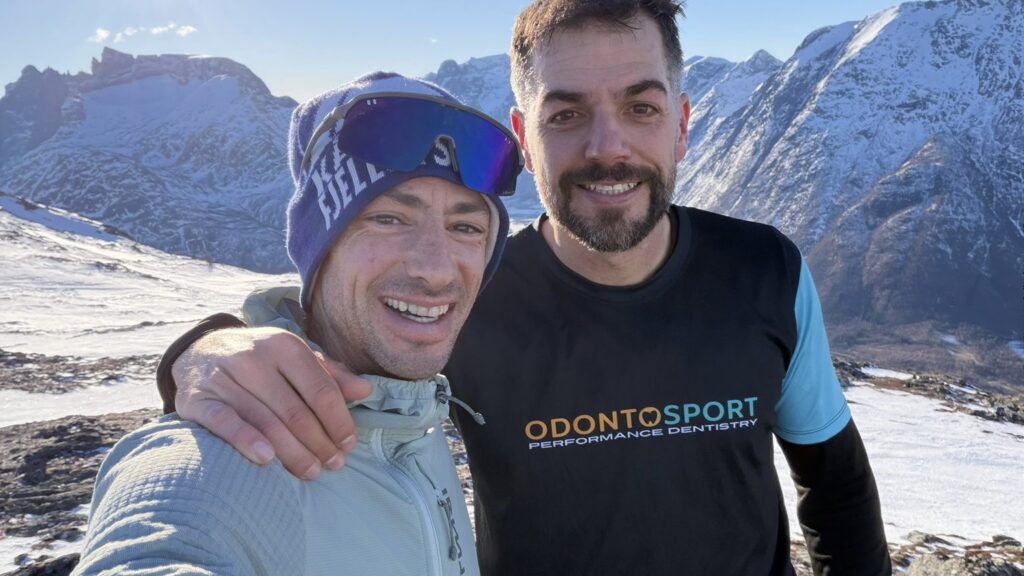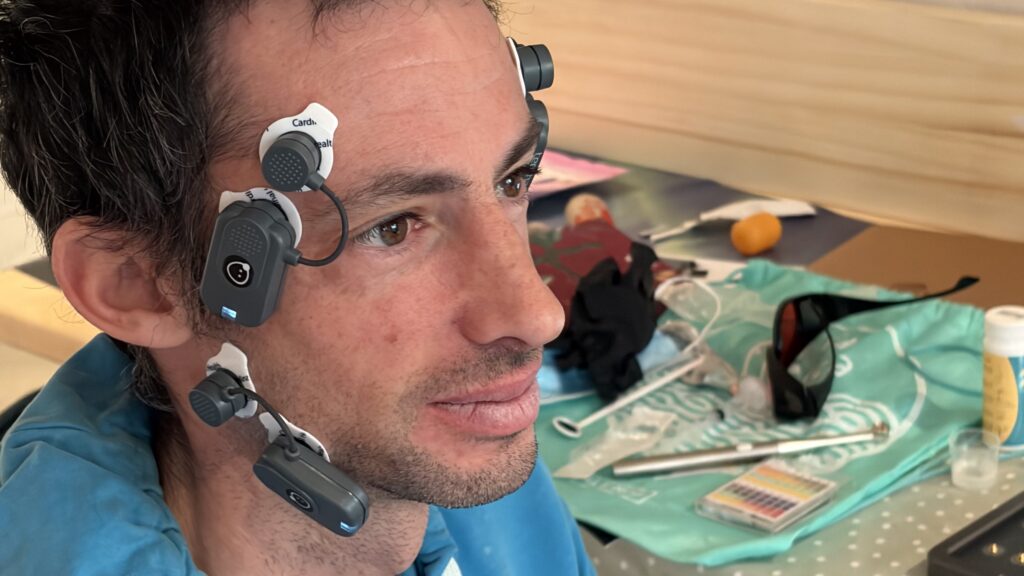
This weekend I had the privilege of working with Kilian Jornet.
When we think about elite ultra-endurance performance, we think about altitude adaptation, VO₂ max, lactate thresholds, recovery protocols, and HRV metrics.
Rarely do we think about saliva.
But we should.
The Oral Environment Under Extreme Load
Ultra-endurance athletes live in a state of repeated physiological stress.
Years of high-volume training.
Long mountain sessions.
Extended races.
Frequent mouth breathing.
Variable hydration patterns.
Over time, these factors profoundly affect the oral ecosystem.
When evaluating elite endurance athletes, a pattern frequently emerges:
- Enamel wear compatible with chronic acid exposure
- Increased risk of dental erosion
- Greater susceptibility to demineralization
- Functional adaptations in occlusion due to long-term load
Not because of poor hygiene.
Not because of neglect.
But because of physiology.
Why Ultra Runners and Cyclists Are Particularly Vulnerable
There are four main mechanisms at play:
1. Prolonged Mouth Breathing
During intense or long-duration efforts, nasal breathing becomes insufficient. Chronic mouth breathing reduces salivary protection and accelerates oral dehydration.
2. Reduced Salivary Flow
High sympathetic activation combined with fluid loss decreases saliva production.
3. Lower Buffer Capacity
Saliva remains acidic for longer periods, reducing its protective capacity.
4. Cumulative Exposure
The key factor is repetition — thousands of hours over decades.
Small daily impacts become structural changes.
Performance Is Systemic
In elite sport, marginal gains matter.
Occlusal balance influences neuromuscular symmetry.
Inflammation influences recovery capacity.
Oral discomfort influences sleep quality.
Dehydration affects salivary defense mechanisms.
The mouth is not isolated from performance.
It is part of the performance system.
An Important Distinction: Erosion vs. Bruxism
One of the most common misconceptions in endurance athletes is attributing dental wear solely to stress-induced bruxism.
In reality, many high-level ultra athletes show wear patterns that are predominantly erosive, not mechanical.
This distinction is critical because:
- Bruxism requires one approach.
- Chronic acid exposure requires another.
Precision matters in elite care.
The Prevention Strategy for Endurance Athletes
If you train more than 10–15 hours per week, compete in ultra-distance races, or cycle for prolonged stages, your preventive protocol should include:
- Structured hydration strategies during long efforts
- High-fluoride toothpaste after extended sessions
- Remineralization support
- Periodic erosion screening
- Functional occlusal assessment
Enamel does not regenerate.
Prevention must be proactive, not reactive.
The Bigger Message
Working with athletes like Kilian Jornet reinforces something very clear:
You can be metabolically extraordinary.
You can have exceptional cardiovascular fitness.
You can optimize every performance variable.
And still overlook your oral physiology.
Ultra-endurance sport pushes human limits.
But biology always leaves a trace.
If you are an ultra runner, cyclist, or elite endurance athlete, oral health is not cosmetic.
It is structural.
It is metabolic.
It is neuromuscular.
It is performance-related.
And it deserves the same attention as your training plan.